

Low Volt Electrical Tools
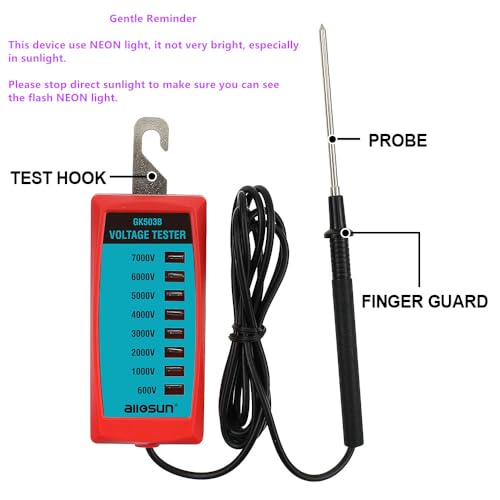
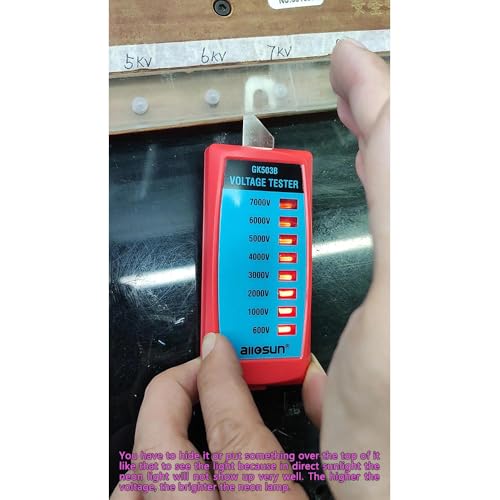
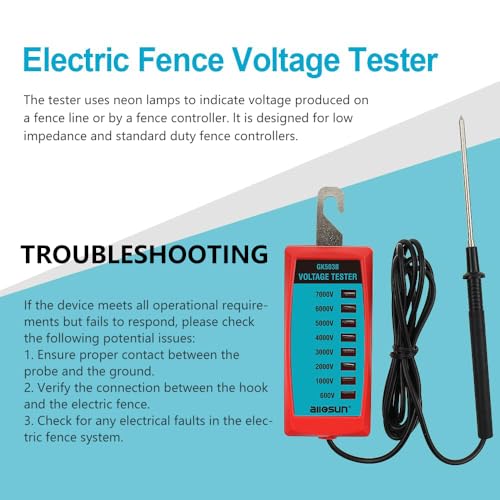
The electric fence tester is specifically designed for testing standard duty, low impedance electric fences. Perfect for checking power on the electric fence around your garden, it is compact and easy to carry, fitting snugly in your pocket. When used in direct sunlight, the neon light might not be very visible. However, by covering the neon light, you can ensure it remains legible. The neon lamp illuminates more brightly as the voltage increases, making it an ideal tool for measuring higher voltage levels.
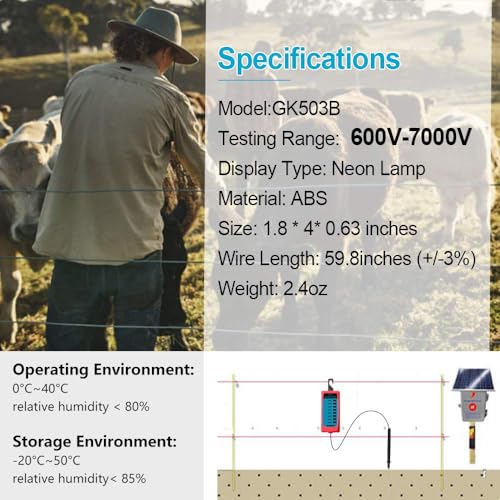
The electric fence voltage checker is designed to help you quickly identify any fence faults by measuring the voltage levels on your fence line and fence controller. To use it effectively, simply hook the metal loop onto the wire, insert the probe into the ground, and hang it near the fence, making sure the probe is buried under the fence. This product is suitable for use in temperatures ranging from 0°C to 40°C with relative humidity up to 80%; for storage, the conditions should be between -20°C and 50°C with relative humidity up to 85%.
The electric fence voltage tester features neon lamps to indicate voltage levels from 0.6 kV to 7 kV (600 volts to 7000 volts). Unlike LEDs, neon bulbs are more durable and can handle thousands of volts, making them easier to read in shaded or evening light conditions. Although the light may not be as bright in direct sunlight, you can improve visibility by shielding the neon lamp with your hand.
The electric fence tester uses a pulse low voltage wire, ensuring that the wires are insulated with plastic to prevent short circuits. The tester operates on the principle that the high voltage from the fence can light up a neon bulb without requiring batteries. While the light may not be extremely bright, it remains visible. For optimal visibility, cover the neon lamp with your hand when using it in bright sunlight—this simple technique enhances readability significantly.
ALLOSUN electric fence testers are versatile, suitable for various animal control situations. Before testing, ensure that no metal objects come into contact with the wire to avoid false readings. It is recommended to verify the tester's functionality by measuring a known electric fence before actual use. Low voltage fences may have insufficient light for detection in bright sunlight, making it necessary to use a shading technique to ensure accurate readings.
By following these guidelines, you can effectively use the electric fence tester to keep your fence operational and safe.
 New
 New
 New
 New
